isxdigit() function in C
Using the isxdigit() function in C
The isxdigit() function in C is used to check whether a character is a hexadecimal digit (0-9,a-f,A-F). The function takes a character as input and returns a non-zero value if the character is a hexadecimal digit, or zero if the character is not a hexadecimal digit.
Here is an example of how to use the isxdigit() function:
#include <stdio.h>
#include <stdint.h>
#include <ctype.h>

int32_t main(int32_t argc, char const *argv[])
{
    char c = 'a';

    int32_t result = isxdigit(c);

    if (result > 0x00)
    {
        printf("The character '%c' is a hexadecimal digit.\n", c);
    }
    else
    {
        printf("The character '%c' is not a hexadecimal digit.\n", c);
    }

    return 0;
}
The isxdigit() function takes a character as input and returns a non-zero value if the character is a hexadecimal digit, or zero if the character is not a hexadecimal digit. In this example, the character 'a' is a hexadecimal digit, so the function will return non-zero and the printf() statement will print the output.
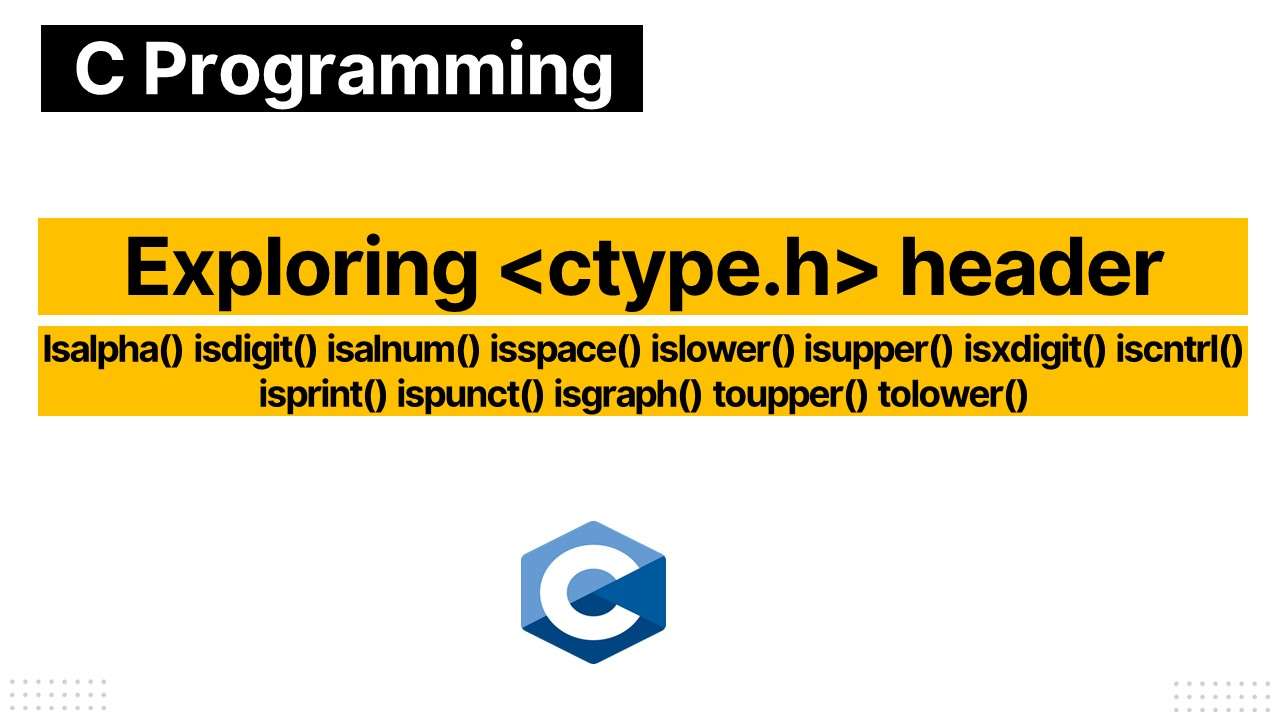
Explore the complete list of functions available in ctype header in C standard library.
About the author
Driving innovation in embedded systems, IoT, and FPGA/SOC development. Delivering cutting-edge solutions, expert technical services, and empowering the tech community.
Comments
Join the discussionNo comments yet. Be the first to comment.